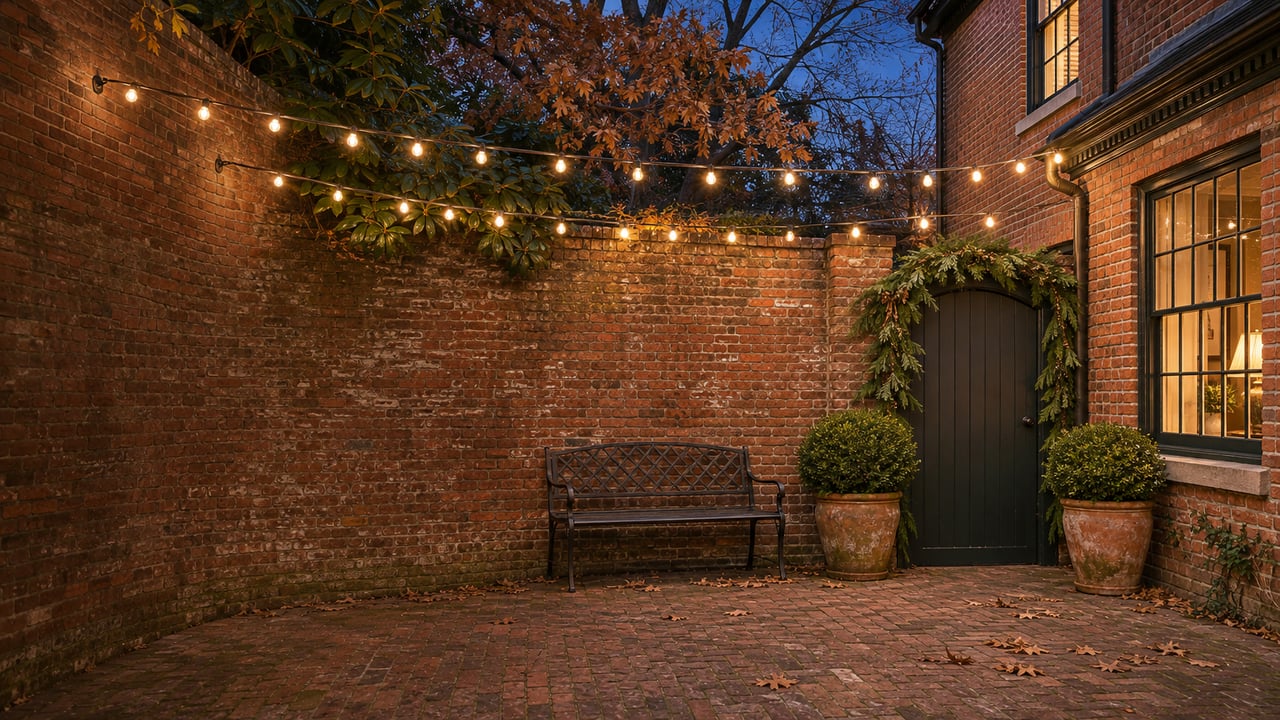
What exactly came back when the fences around Logan Circle started coming down on the morning of October 14? PoPville readers began writing in at 8:22 a.m. that day to report it, more than six months after the fencing first went up.
On the surface, the familiar circle is back, with new sod, new benches and a working fountain. The rules are different, though. In the National Park Service's current rulebook for the parks it manages downtown, everything inside the central circle is listed as a Commemorative Protection Zone. That is the agency's highest level of protection for a monument site, and it puts the lawn around General John A. Logan's statue in the same group as the Dupont Circle fountain plaza and Sheridan Circle.
Seven months, in the order neighbors saw them
The project ran longer than announced. NPS closed the circle starting March 30 and promised to reopen it on June 15, according to Greater Greater Washington. Here is how it actually went, mostly as PoPville readers reported it:
- Late March: All the benches were removed before the closure.
- June 25: Workers were unloading and installing new benches.
- July 1: The main fence came down and the sidewalks opened, but the grass stayed closed.
- July 2: Readers sent in photos of a new water fountain while crews swapped orange construction fencing for wooden fencing.
- Early August: The new sod was browning in neat rectangles while most of the park was still fenced.
- August 5: NPS and local leaders held a ribbon-cutting in front of the equestrian statue, WJLA reported. The station said the construction fencing would stay up until at least October.
- August 24: A reader reported that the circle's informal dog park had reopened through small gaps in the fence.
- September 2: The turf was still fenced and still brown in places.
- October 8: Trees in the middle of the circle were cut down. From the photos, one reader said one of them looked very healthy and another did not.
- October 14: The fences started coming down.
What the work actually replaced
When the closure started, NPS described the project to PoPville as restoration and beautification. The list was specific: replace the exposed-aggregate walkways, restore the turf and landscaping, install irrigation, repair and upgrade the lighting, replace the trash cans, repair benches and other furnishings, do tree and arborist work, add new iron fencing around the inner circle, and repair the fencing that was already there. WJLA's report on the completed project added repairs to the equestrian statue and the new public water fountain. At the August ceremony, Ward 2 Councilmember Brooke Pinto called Logan Circle "a beautiful park and gathering space for many in our community," WJLA reported.
Most of that list is upkeep for a historic setting: the statue, the walkways, the lawn, the lamps and a new iron fence. The fountain is the one item made for people who stop and stay a while. The project restored what was already there and added very little, and the rules that came after it follow the same priorities.
The rulebook now names the circle
Every NPS unit publishes a Superintendent's Compendium, a written list of the closures, permit requirements and restrictions the superintendent can set. The version for National Mall and Memorial Parks, which covers the downtown circles and squares as far north as Florida Avenue NW, was approved September 11, 2026. It replaced a June 8 version.
The compendium defines a Commemorative Protection Zone as "the highest level of spatial protection established around a commemorative work within National Park Service (NPS) jurisdiction." It then lists the places that have one. Logan Circle's entry reads:
Logan Circle Grounds all areas within the central Logan Circle
Other places on the same list include the Columbus Fountain and circle at Union Station, the Dupont Circle fountain and plaza with the walkways leading to the street, Sheridan Circle's statue and everything inside that circle, and all of Simon Bolivar Memorial Park. Most of the other entries cover only a statue, a fountain or a plaza. Logan Circle's entry covers everything inside the circle, lawn included, as does Sheridan's.
Inside a protection zone, unless the superintendent gives written authorization for an official commemorative ceremony, the compendium prohibits:
- structures or installations, tents, stages and screens
- sound amplification beyond what a permit allows
- commercial activities
- sleeping or encampment
- unattended or abandoned property
- tripods, stands or other photography gear that touches the ground
The compendium also bars anything else that creates "extended occupation of space." It defines that as keeping people or property in one fixed spot for long enough, or in a way that "materially interferes with visitor circulation, commemorative experience, operational access, or resource protection." The document says the restrictions apply regardless of content or viewpoint.
The definitions section adds one more detail. The compendium sorts commemorative works into three protection tiers. Its description of the top tier, "Tier 1 – High Sensitivity," includes "newly built, restored, or renovated commemorative works with significant government interest in the preservation of the work's resource integrity." In other words, restoring a site is one of the things that can move it into the strictest tier.
The winter rule for new sod
The compendium also has a park-wide rule that matters more in November than in June: "Access to turf is prohibited during frost, saturated conditions, or conditions that would cause turf damage." The same section lets NPS put up partial, temporary turf closures with fences or signs to protect the grass.
Freshly laid sod has had a rough first season here. It browned in August and was still patchy in early September. That means the circle's first winter after the restoration is also the first winter this rule applies to a lawn NPS just paid to replace. The fences started coming down in mid-October, right before the cold months when frost and soggy ground are most common.
Some other rules in the same document apply to everyday use of the circle as well:
- Hours: Outdoor areas are open 24 hours a day, seven days a week, unless otherwise noted.
- Pets: Pet waste must be bagged and put in a trash can.
- Picnics: Groups of 25 or more need a permit to picnic anywhere in the park system.
- The statue: Climbing, marking or hanging anything on statues is prohibited.
All of this is summarized from the NPS document as general information, not legal advice. The compendium itself is the authority on what is allowed, and NPS can revise it.
What one daily user hoped the project would add
Before the work was finished, a neighbor who says they are in the circle every day wrote a piece for Greater Greater Washington. It describes what the space is for in practice. The writer called it "a meeting place, picnic spot, dog run, and people-watching perch for a dense neighborhood with limited park space," and listed their own routine: walking through, stopping to read, meeting friends and playing in the Stonewall Bocce league.
The piece named three things the plan didn't include:
| What the writer proposed | Their reasoning |
|---|---|
| A public restroom | The city recently added a Portland Loo at Walter Pierce Park, and a Throne Labs restroom already serves Dupont Circle |
| Bollards or other barriers along the edge | The writer listed drivers crashing into the park in 2012, 2018, 2023, 2024 and 2025 |
| A designated dog area with drainage and tougher landscaping | The space near the statue already worked as an informal dog run, with worn grass to show for it |
The writer also said neighbors got only a few days' notice before the closure and had no real chance to comment on a final design.
Each of those requests would have added something new to the circle. The work NPS chose kept the lawn, statue and walkways close to their historic design, and the protection-zone listing describes the whole central circle as commemorative ground.
The compendium leaves several everyday questions to NPS: when frost or wet ground closes the turf, how the area near the statue is managed now that the grass is new, and what counts as extended occupation on a given afternoon. The superintendent can post closures with fences or signs and can revise the compendium, as happened in June and again in September.
After almost 20 years on Capitol Hill, I know how much a shared patch of green can mean on a crowded block. If you live near Logan Circle and want to talk about how a park like this figures into a decision about your home, Deirdre Jo Fricke is happy to walk it with you. Let's connect.